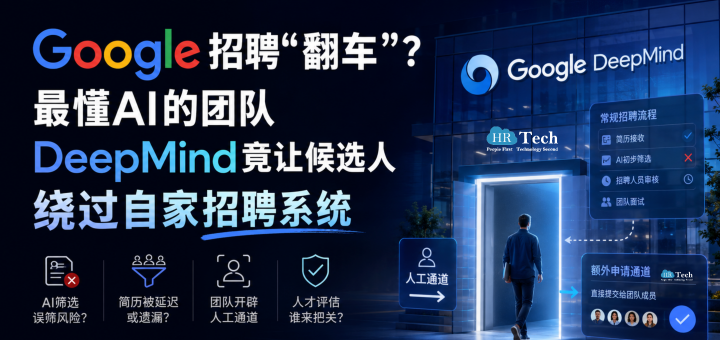
【突发】Google招聘“翻车”?最懂AI的团队DeepMind竟让候选人绕过自家招聘系统HRTech核心摘要:一个很值得 HR 注意的信号:Google DeepMind 最懂 AI 风险的一支团队,正在让部分求职者通过额外表单,把简历直接送到真人手里。内部文件担心,现有申请流程存在一定概率让 CV 被错误筛掉或过晚到达团队。不过 Google 官方否认系统会错误过滤候选人,称额外表单主要是绕过招聘人员的检查。更有意思的是,Google 同时正在向企业 HR 推广 Gemini,用 AI 评估简历、生成职位信息和预测招聘需求。这件事真正提出的问题不是“AI还能不能用于招聘”,而是:自动化之后,HR有没有机制发现那些被算法错过的人?AI招聘下一阶段的关键词,很可能不是自动化,而是保留人的判断、确保过程可追溯,并尽可能减少优秀人才被系统漏掉( Human-in-the-loop + Auditability + False Negative Management)。你觉得呢?
Google 最懂AI的团队 DeepMind 最近一则招聘新闻,引发了人力资源科技行业的关注。原因并不是 Google 正式承认“AI 招聘系统会误杀简历”,而是 Google DeepMind 旗下一个负责通用人工智能安全与对齐研究的团队,在实际招聘中主动增加了一条额外申请通道,希望确保候选人的简历能够直接被团队成员看到。
据 Bloomberg 获取并查看的一份内部文件,Google DeepMind 的 AGI Safety and Alignment Team 在招聘部分岗位时,建议候选人在完成正常职位申请之外,再填写一份额外表单。团队在文件中表示,现有申请系统存在“不容忽视的概率”,可能导致候选人的简历被错误筛掉,或者花费太长时间才能到达真正负责招聘的团队。
填写额外表单之后,申请材料可以直接进入团队成员的视野,从而增加真人看到候选人资料的机会。
Google官方否认“系统会错误淘汰候选人”
这件事情最重要的事实边界必须首先讲清楚。Google DeepMind 发言人并没有承认公司的招聘系统会错误淘汰候选人。Google 对外解释称,这支团队设计额外申请表格,主要目的是绕过招聘人员的前置审核,让候选人的简历能够直接进入业务团队,而不是为了纠正某个已经被证实存在问题的 AI 筛选系统。
Google 同时强调,这种额外通道并不意味着候选人可以绕过正常的招聘评估流程,更不存在获得职位的“捷径”。
因此,目前能够准确确认的是:Google DeepMind 的一个招聘团队认为现有申请流程存在简历被错误筛掉或延迟到达团队的风险,并主动增加了人工查看通道;但 Google 官方并不认同“公司系统会错误过滤候选人”这一说法。
此外,目前没有公开证据说明究竟是哪一套内部招聘系统参与了筛选,也没有证据证明这一系统就是 Gemini,更没有披露所谓“误筛概率”到底是多少。
所以,这件事情不应该被简单包装成“Google AI 招聘翻车”,但它确实暴露出了一个越来越重要的招聘科技问题。
AI招聘真正的风险,可能不是效率低,而是漏掉合适的人
过去十多年,招聘科技最主要的价值指标几乎都围绕效率展开,例如缩短招聘周期、降低招聘成本、提高招聘人员处理简历的能力,以及帮助企业从大规模候选人中更快找到匹配对象。
生成式 AI 和智能匹配技术的加入,又进一步推动了这一趋势。
AI 可以帮助企业读取更多简历、更快完成初步排序、识别技能关键词,也可以帮助招聘人员生成职位描述、候选人沟通内容和面试总结。
这些效率提升都是真实存在的。
但招聘毕竟不是单纯的信息处理问题,它最终仍然是人才判断问题。
假设一家企业收到一万份申请,系统可以在很短时间内筛选出五百人,这当然提高了招聘效率。但如果真正最适合岗位的二十个人中,有几个人在第一轮就被系统排除,而且业务负责人永远没有机会看到他们,那么企业是否还能认为这套系统是成功的?
这就是未来 AI 招聘中一个越来越值得重视的问题:系统漏掉了多少原本值得进入下一阶段的候选人。
过去企业大量关注“筛选效率”,未来可能需要增加一个完全不同的视角:人才漏筛率。
也就是说,企业不仅应该问“AI帮我们处理了多少简历”,还应该问:“AI有没有把真正值得关注的人提前排除掉?”
对于已经开始在招聘、人才管理、绩效管理等场景中使用 AI 的企业,仅仅统计“员工是否使用AI”已经无法代表真正的成熟度。HRTech 正在通过 HR AI Forward,从个人能力、团队工作流和组织层面进一步评估 AI 是否真正进入工作过程,并产生可衡量的业务结果。
更值得关注的是,Google自己正在向HR推广AI招聘能力
这起事件之所以具有代表性,还有一个非常有意思的背景。
Google Workspace 目前正在公开向人力资源团队推广 Gemini 在 HR 工作中的应用。Google 官方页面明确介绍,Gemini 可以帮助 HR 创建职位信息、辅助评估简历、处理招聘沟通,并预测未来招聘需求。
这并不意味着 Google DeepMind 的团队“不信任 Gemini”,目前没有证据能够支持这样的结论。
但它确实呈现出一个非常典型的企业 AI 场景:一方面,Google 正在积极推动 AI 进入人力资源和招聘流程;另一方面,Google DeepMind 自己的一支专业团队却在实际招聘过程中增加了额外的人工查看机制,以确保关键候选人不会因为正常流程而无法及时进入团队视野。
这背后的问题已经不再是“到底应该用AI还是人工”。
更准确的问题是:哪些工作可以交给AI,哪些关键节点必须保留人工判断。
这也是未来人力资源科技产品设计中越来越重要的一条原则。
人工参与并不意味着AI倒退
过去企业谈自动化时,很容易形成一个简单判断:人工操作越少,自动化程度越高,系统就越先进。
但在招聘这样的高影响决策场景中,这种逻辑并不完全成立。
招聘不仅关系到企业能否找到合适的人,也直接影响候选人的职业机会。如果筛选机制无法解释、无法审查,企业不仅可能错过人才,还可能面对公平性、偏差、合规以及候选人体验方面的问题。
因此,更成熟的 AI 招聘系统至少应该能够回答几个问题:为什么一个候选人被优先推荐?为什么另一个人没有进入下一轮?招聘经理是否仍然可以查看没有被系统推荐的简历?系统能否持续评估自己是否经常漏掉高质量候选人?不同候选人群体之间的筛选结果是否存在异常差异?
这并不是要让招聘重新回到完全依靠人工逐份阅读简历的时代。
真正成熟的人机协作应该是:AI 负责处理规模、发现模式和提高效率,人负责关键判断、异常复核和最终责任。
AI正在同时改变招聘的两端
Google DeepMind 的内部表格还有一个容易被忽略的细节。
团队同时提醒申请人,提交的内容最终会由真人阅读,而团队成员已经开始厌倦大量高度相似、明显由大语言模型生成的申请答案。
这说明 AI 正在同时改变招聘流程的两个方向。
一边是求职者越来越多地使用 ChatGPT、Gemini 等工具优化简历、求职信和申请问题;另一边是企业为了处理越来越大的申请量,又开始使用更多 AI 来帮助完成筛选和排序。
最终可能形成一个循环:候选人使用 AI 提高申请效率,企业收到更多申请;企业使用 AI 进行筛选,候选人又开始研究如何提高自己被系统识别的概率;企业继续升级筛选机制,求职者继续优化自己的申请策略。
如果这种趋势持续下去,招聘科技真正要解决的问题就不再只是“自动化程度够不够高”,而是“整个招聘过程是否可控”。
谁拥有最终决策权?在哪些情况下必须人工复核?系统错误如何被发现?筛选质量如何持续评估?候选人是否知道 AI 在招聘中发挥了多大作用?
这些已经不仅是技术团队的问题,也正在成为招聘负责人和人力资源管理者必须面对的问题。
HRTech 目前持续关注的重点,也正在从“企业有没有使用AI”转向“AI究竟如何改变HR工作”。通过 HR AI Forward,可以进一步观察 AI 是否只是增加了一个新工具,还是已经真正改变了岗位、任务、团队协作方式和组织运行机制。
HRTech观察:AI招聘正在从“提高效率”进入“提高决策质量”阶段
如果把招聘 AI 的发展分成两个阶段,第一阶段的关键词是效率。
谁能够更快读取简历、更快匹配候选人、更快生成招聘内容,谁就能够为招聘团队节省更多时间。
但第二阶段的竞争,很可能会转向决策质量。
未来企业不会只问:“这个系统帮我节省了多少招聘时间?”
还会问:“这个系统推荐的人到底准不准?”“它为什么没有推荐另一个人?”“它是否经常漏掉优秀候选人?”“我是否有办法发现系统犯错?”
这意味着 AI 招聘的衡量标准也需要发生变化。
过去,企业关注的是 AI 使用率,也就是有多少招聘人员开始使用 AI;下一阶段,需要关注 AI 是否真正改善了招聘结果;再往后,则是如何建立完整的 AI 管理机制,确保企业知道 AI 在什么时候做对了,也知道它在什么时候可能做错。
Google DeepMind 这次招聘事件并不能证明 AI 不适合招聘。它反而说明,当 AI 开始真正进入招聘核心流程之后,企业正在进入一个更加成熟的阶段。
真正优秀的AI招聘系统,不应该只是帮助企业更快地淘汰候选人,而应该帮助企业更准确地发现人才,并能够判断自己有没有漏掉真正值得关注的人。
这可能才是 AI 招聘下一阶段真正的竞争焦点。
从Google DeepMind的招聘争议,到AI正在重构招聘、人才管理和HR工作方式,真正值得中国HR思考的已经不只是“要不要用AI”,而是如何把AI真正带入工作流程,同时保留人的判断、责任和价值。
2026年下半年,HRTech也将继续把这些全球最新趋势带到中国HR的线下交流现场:
9月17日,2026人力资源科技年度论坛·深圳将围绕AI、数字化、人才与组织创新展开讨论,详情及报名:
https://www.hrtechchina.com/Public/html/917.html
10月22日,2026 HRTechXPO®超级盛典:未来人力资源科技论坛·上海将聚焦AI与未来人力资源科技,连接上海及长三角地区HR决策者,详情及报名:https://www.hrtechchina.com/Public/html/event/1022sh.html;
11月19日,2026 HRTechXPO®超级盛典:未来人力资源科技论坛·北京将继续围绕AI、HR科技创新与未来工作展开深度交流,连接北京及华北地区HR管理者,详情及报名:https://www.hrtechchina.com/Public/html/event/1119bj.html
如果你正在思考AI如何真正进入招聘、人才管理和组织工作流,欢迎来到深圳、上海或北京,与更多企业HR和行业同行一起讨论下一阶段的人力资源科技。
更多HRTech活动安排:https://www.hrtechchina.com/Public/html/event/eventlist.html
HRTech编辑备注: 截至2026年8月14日,公开报道没有披露 Google DeepMind 所指申请系统的正式名称、具体算法、实际误筛比例或受影响候选人人数,也没有证据证明该系统就是 Gemini。因此,本文没有将该事件表述为“Google承认AI误杀候选人”,而是严格采用“团队内部表达担忧、Google官方否认系统错误过滤”的事实框架。
来源: Bloomberg 记者 Julia Love 的相关报道,经 Los Angeles Times 于2026年8月11日刊载;Staffing Industry Analysts 于2026年8月13日跟进报道;HR Executive 于2026年8月14日从招聘科技角度进行报道;Google Workspace 官方 AI for HR 页面用于核实 Google 当前向人力资源团队推广 Gemini 在招聘、简历评估和招聘需求预测等场景中的应用。
Bloomberg
2026年08月15日
Bloomberg
Workday观点:如何解决企业未来的人才? Taking the Next Steps for Tomorrow's Talent
作者:Leighanne Levensaler,workday高级副总裁,企业战略,工作日兼董事总经理兼Workday Ventures联席主管
文章导读:
我和一群商业和教育领袖,参加了在纽约举行的彭博下一个论坛(Bloomberg Next forum)。这次论坛的主题是:在如此大的变革中,我们如何才能更好地培养和支持我们的员工队伍。
它涵盖了一系列挑战:从如何让毕业生更好地为工作做好准备,到如何在人工智能和自动化时代让在职员工重新掌握技能,再到企业和教育工作者如何更好地合作。
在Workday与彭博资讯(Bloomberg Next)密切合作的原因是积极参与寻找解决这些复杂问题的方法。
我们在纽约进行了富有洞察力和启发性的讨论,以下是一些想法:
首先解决当地的问题
我们的世界面临着与劳动力发展有关的重大挑战。最好从当地开始。
例如,
是否有社区大学或贸易学校提供课程,让工人为预期的技能转变做好准备?
您的组织是否可以扩大与当地高等教育学校的沟通,让学生更好地掌握他们所需要的技能?
随着不断的创新,所需技能也不断变化。在Workday,与社区内的大学合作,让技术专家担任客座讲师,帮助学生为现实世界做准备。
寻找外部人才的新来源
企业说他们找不到需要的人才。但问题是否源于只招具有特定高等教育学位或工作经验的候选人?公司需要考虑他们是否过度要求实行纯种招聘。
在Workday,我们已经取得了巨大的成功,这些人才并没有遵循从高中到大学再到职业生涯的传统道路,但事实证明,它们都是出色的同事。多元化和包容性的员工队伍会让工作场所更快乐,并带来更大的商业成果。
从内部来源
一些最优秀的人才不一定能充分发挥他们的潜能或提供充分发展潜能的机会。这就是为什么真正了解自己的才能至关重要。
具体做法:通过定期使用技术来盘点你的员工和他们的技能,并建立一种流动和机会的文化。
拥抱创新的速度
创新对我们所有人来说都是一件好事,但它给劳动力发展带来了挑战。随着不断的创新,所需技能也要不断变化。
问题是,没有很多的公司愿意在重新培训技能中投入更多资金。在Workday和Bloomberg Next的调查中,半数受访企业预计,在应对新兴技术对劳动力影响的计划时,都面临预算紧张。
只有30%的企业和39%的教育工作者表示,他们正在合作帮助员工重新技能和重新培训。
我们可以在如何共同应对创新的影响方面更具创新性。另一个想法是:如何与教育机构的研究人员合作,帮助定义未来在不同行业中的角色?
我们都需要持续学习。学习如何去了解比去了解更好。
英文原文:
By Leighanne Levensaler, Senior Vice President, Corporate Strategy, Workday & Managing Director and Co-Head, Workday Ventures
I recently joined a group of business and education leaders for a Bloomberg Next forum in New York that focused on how we can work together to best nurture and support our workforces in the midst of so much change.
Aptly named Tomorrow’s Talent, the forum covered a number of timely challenges, ranging from how we can better prepare graduates for the workplace, to how we can reskill current workers in the age of artificial intelligence and automation, to how businesses and educators can better collaborate.
Knowing that people are the heart of every enterprise, we at Workday are passionate about being an active participant in finding the solutions to these complex issues. That’s why we partnered closely with Bloomberg Next on the event, including a study that surveyed business and education leaders’ views on these topics and more. Not surprisingly, the findings confirm there’s a lot more work to do.
So where do we start? I shared some ideas in a blog prior to the forum. Following our insightful and inspiring discussions in New York, here are some additional ideas.
Solve Locally First
Our world faces significant challenges related to workforce development. We’d all like a systematic macro answer. The reality is that these problems are far too broad and complex to be addressed with a single universal solution. It’s best to start working locally to learn and gain momentum.
For example, are there community colleges or trade schools that offer classes that could prepare workers for an anticipated shift in skill sets? Are there local higher education feeder schools that your organization could broaden the dialogue with on how to better prepare students with both the hard and soft skills they need?
With constant innovation comes the constant change of needed skills.
At Workday, we’ve partnered with universities in our communities to have our technologists serve as guest lecturers and help students prepare for the real world. I would encourage all organizations to explore these types of opportunities, because as one participant said, “If you’re sitting still, you’re falling behind.”
Seek Out New Sources of External Talent
Businesses say they can’t find the talent they need. But could the problem stem from always returning to the same pond to fish—a pond that only has candidates with specific types of higher education degrees or job experiences? Companies need to consider whether they are practicing pedigree hiring by over-credentialing job requirements. A willingness to learn “how” is a stronger attribute than a willingness to learn “what,” especially in today’s rapidly changing world.
What’s more, pedigree hiring works against an organization’s efforts to create a more diverse and inclusive workforce. At Workday, we’ve had great success partnering with organizations such as Year Up and Opportunity@Work to gain talent that didn’t follow the traditional path from high school to college to career, yet have proved to be incredible colleagues. We know that a diverse and inclusive workforce makes for a happier workplace and results in greater business outcomes.
Source from Within
Some of our best talent is often right under our noses, but not necessarily in positions that can utilize their full potential or provide the opportunity to grow. That’s why it’s critical to truly know your talent.
How do you do that? By regularly using technology to take inventory of your people and their skills across the organization, democratizing learning experiences so that everyone has access to them, and building a culture of mobility and opportunity. This requires being radically transparent in communicating opportunities for career growth.
Embrace the Velocity of Innovation
Our dear friend, innovation. There’s no stopping it and we don’t want to. Innovation is a great thing for all of us, but it creates challenges in workforce development. With constant innovation comes the constant change of needed skills.
The problem is, not enough companies are willing to put more skin in the game when it comes to reskilling. In the Workday and Bloomberg Next survey, half of the corporate respondents anticipate facing budget constraints when deploying a plan to address the impact of emerging technologies on the workforce. So let me ask this: If a company is willing to put time, money, and resources behind responding to innovations that impact its competitive landscape or business model, why wouldn’t it also invest in innovations that impact its workforce?
Only 30 percent of corporations and 39 percent of educators say they are collaborating to help reskill and retrain employees.
Partnerships with other organizations can help ease the burden. Jon Kaplan, vice president of training and development at Discover Financial Services, discussed how their company is using Guild Education to manage a number of aspects of its recently announced Discover College Commitment program, which provides a full tuition ride for all employees seeking to pursue a university degree online from one of three selected universities.
The program got a lot of interest from the forum audience because it’s truly unique. Consider that only 30 percent of corporations and 39 percent of educators say they are collaborating to help reskill and retrain employees, according to the survey. I’m sure we can be more innovative about how we work together to address the impact of innovation. Another idea: What about partnering with researchers at educational institutions to help define the roles of the future within various industries?
I’ll end this post with one final thought: We all need to be in the business of continuous learning. Dr. Seuss is a favorite in our household with his endless wisdom and clever turns of phrase. And, as the good doctor says, “It’s better to learn how to know than to know.

 Bloomberg
 Bloomberg
 扫一扫 加微信
hrtechchina
扫一扫 加微信
hrtechchina