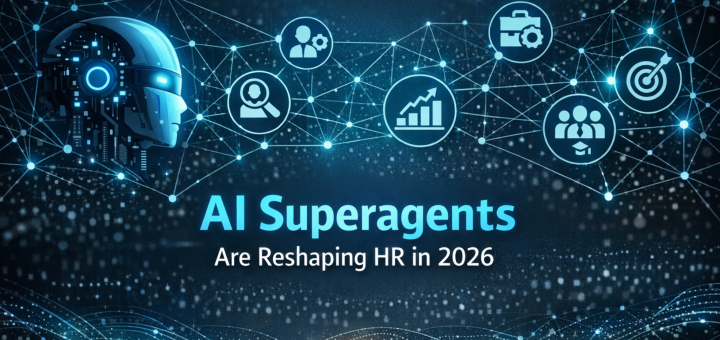
AI 超级智能体时代来临:CHRO们2026年的11 项关键行动纲领2026 年,企业人力资源管理正站在一个关键转折点。随着 AI 从“辅助工具”加速演进为具备自主编排能力的“超级智能体(Superagents)”,HR 的角色、组织结构与价值创造方式正在发生根本性变化。多项研究显示,未来一年内,超过百项传统 HR 流程将被 AI 深度自动化,HR 核心岗位结构也将随之重构。
这场变革并非简单的技术升级,而是一场以组织设计、能力转型和治理体系为核心的系统性重塑。对 CHRO 而言,关键不在于是否使用 AI,而在于如何主导 AI 在组织中的落地方式、节奏与边界。围绕这一现实挑战,当前 HR 领导者需要重点把握以下 11 项行动纲领。
1. Build a unified AI architecture构建统一的 AI 架构
AI 在 HR 中的首要挑战并非能力不足,而是架构碎片化。招聘、学习、员工服务、绩效管理等模块各自引入 AI 工具,往往造成流程割裂、数据孤岛与治理复杂度上升。
CHRO 的关键任务,是从“工具采购者”转向“架构设计者”,构建可扩展、可治理的统一 AI 体系,使不同 HR 代理能够在更高层级被协调和编排。
2. Embrace the era of the corporate citizen developer拥抱“企业公民开发者”时代
AI 的构建不应只发生在技术部门。随着低代码、无代码和生成式 AI 工具的成熟,HR 专业人员本身具备参与 AI 流程设计的现实条件。
这意味着 HR 角色需要升级:不仅理解业务需求,还能参与设计和迭代 AI 工作流。CHRO 应推动 HR 从“系统使用者”走向“智能共建者”。
3. Plan for job transformation, not job destruction规划岗位转型,而非岗位消失
AI 的引入将显著减少重复性、事务型 HR 工作,但其本质并非简单裁撤人力,而是岗位结构的重塑。
CHRO 需要提前识别哪些角色将被重构,哪些新能力将出现,并为员工提供清晰的转型路径,将组织焦虑转化为能力升级的契机。
4. Put employee care at the center将员工关怀置于核心位置
随着 AI 深度介入招聘、绩效评估与行为分析,员工对公平性、隐私与信任的关注将显著上升。
在 AI 时代,员工关怀不再只是文化议题,而是治理议题。CHRO 必须确保 AI 的使用方式透明、可解释,并以员工福祉为重要评估标准。
5. Move beyond yesterday’s talent management超越旧时代的人才管理模式
基于固定岗位、年度周期和外部招聘优先的传统人才管理模式,已难以适应技能快速演进的现实。
AI 使企业更容易识别内部潜力、支持动态流动与持续成长。CHRO 需要推动从“岗位管理”转向“能力密度与人才流动性”的管理逻辑。
6. Prepare for AI-powered digital leadership为 AI 驱动的数字化领导力做好准备
领导力长期以来难以规模化复制,而 AI 为这一难题提供了新路径。通过分析优秀领导行为并形成数字化模型,AI 可以为管理者提供持续、个性化的指导与反馈。
CHRO 需要重新思考领导力培养方式,使其从经验传承走向系统化放大。
7. Start an AI-driven learning revolution启动 AI 驱动的学习革命
传统以课程为中心的学习体系正在被重构。AI 能根据个人角色、任务和发展阶段,动态生成学习内容与实践建议。
这要求 CHRO 将学习视为“能力生成系统”的设计问题,而非单纯的内容管理问题。
8. Integrate your recruitment AI investments整合招聘领域的 AI 投入
招聘往往是 AI 应用最密集、却体验最割裂的 HR 领域。多个独立工具并存,容易削弱整体效率和候选人体验。
CHRO 应从端到端流程出发,整合招聘相关 AI 代理,以整体转化率和体验质量为核心衡量标准。
9. Expect major HR vendor disruption预期 HR 科技厂商的重大洗牌
AI 将加速 HR 科技市场的分化。一部分厂商可能因无法融入新架构而退出,另一部分则通过并购和重构获得新生。
CHRO 在技术选型时,应关注长期架构适配性和治理能力,而非短期功能展示。
10. Invest in LLM quality, not just access投资于大模型质量,而不仅是接入能力
真正决定 AI 价值的,并非是否使用大模型,而是数据质量、标注逻辑、验证机制与治理体系。
HR 数据的准确性、合规性和可解释性,将直接影响 AI 决策的可靠性。CHRO 需要将 HR 数据视为长期战略资产进行管理。
11. Lead the AI transformation由 CHRO 亲自领导 AI 转型
如果 HR 不主动承担 AI 转型的领导责任,AI 将在组织内被分散推进,缺乏统一方向和治理框架。
CHRO 需要走出职能边界,与 IT 和业务高层协同,将 AI 视为组织能力建设工程,而非单一技术项目。
本文行动纲领与判断,基于 The Josh Bersin Company 于 2026 年发布的最新研究成果整理而成。该研究由 Josh Bersin 及其研究团队主导,长期聚焦人力资源科技、组织设计与未来工作模式,对全球企业 HR 战略具有广泛参考价值。本文在不涉及任何产品或平台推广的前提下,提炼了其中对 CHRO 具有普遍适用意义的核心观点与行动方向
这 11 项行动纲领的共同指向十分明确:HR 正在从流程执行者,转变为 AI 时代的组织架构师与能力设计者。
对 CHRO 而言,2026 年并不是“是否使用 AI”的选择题,而是如何在 AI 驱动下重新定义 HR 的使命、边界与长期价值。这将决定 HR 在未来企业中的战略位置,也将深刻影响组织的韧性与竞争力。
【HR术语】什么是学习管理系统?(What is a learning management system?)
什么是学习管理系统?
学习管理系统(LMS)是公司用来培训和教育员工、客户和业务伙伴的一种软件。传统的工作培训计划需要亲自参加,耗时数小时或数天。但 LMS 技术简化了这一学习过程。
它为教育内容提供一站式服务,提供包括视频、程序、课程、测验和指南在内的学习选项。这些内容可以是实时的,也可以是录制的,因此身处不同地点、时区和公司的个人都能轻松获取。公司使用 LMS 的目的是:
创建信息内容
在集中的数字位置组织内容
将内容直接发送给目标受众
监控学习进度
促进学习协作
人力资源领导为什么要关注学习管理系统?
学习管理系统软件提供定制化的信息内容,以吸引、激励和培养员工,同时提高生产率和员工保留率。学习管理系统可促进员工的专业成长,推动公司实现业务目标。学习管理系统可以优化人力资源功能,例如:
工作和合规培训
入职培训
技能差距分析
学习与发展
常见的学习管理系统功能和组件
学习管理系统因组织的需求而异。它们提供各种功能,旨在增强学习体验和简化管理任务。
一些常见的功能和组件包括:
用户管理。管理员可以管理用户配置文件、角色和权限,以便学习者可以访问适当的课程和材料。
课程创建。教师可以创建、组织和提供课程。他们可以上传不同类型的内容、设置作业和管理评分。
报告和分析。LMS 可提供有关学员进度、完成率和评估结果的数据,帮助管理员做出明智的决策。
设备兼容性。许多 LMS 都对移动设备友好,学习者可以使用智能手机和平板电脑访问内容和参与课程。
学习管理系统的类型
学习管理系统有多种不同类型:
企业 LMS。专为员工培训和发展而设计,具有合规跟踪、技能差距分析和绩效管理等功能。
开源 LMS。这些平台可定制且免费使用,为希望根据自身具体需求定制系统的组织提供了灵活性。
基于云的 LMS。这些在线学习管理系统由云端托管,具有可扩展性,可从任何有互联网连接的地方进行访问。
托管式 LMS。企业可以将这些 LMS 平台安装在本地服务器或硬件上,从而实现完全控制。
学习管理系统如何工作?
学员和教师可以通过创建用户账户访问企业的学习管理系统。
这些平台可能有预建课程,也可能允许企业轻松创建自己的课程。教师在平台上为学员上传课程资料,如文本、视频、测验和作业。
LMS 通常会生成关于学习者表现和课程效果的报告,因此管理层可以跟踪学习进度。管理员可以利用这些数据进行改进。
如何选择最佳学习管理系统
确定目标。明确概述学习目标和预期成果。
评估可扩展性。考虑 LMS 能否满足您当前和未来的需求。
考虑预算。确定 LMS 的预算,包括初始设置成本和持续维护费用。
确保用户界面友好。确保 LMS 为管理员和学员提供直观的界面。易用性是采用的关键。
检查内容兼容性。检查 LMS 是否支持您计划提供的内容类型,如多媒体和互动元素。
测试集成能力。如果计划将 LMS 与其他系统集成,请确保它能与这些系统协同工作。
评估 LMS 培训和支持。评估不同学习管理系统供应商提供的培训和支持水平。
如何成功实施学习管理系统
明智选择。由于学习管理系统的数量多得令人眼花缭乱,人力资源领导者必须重点考虑为什么要采用学习管理系统,以及学习管理系统将如何帮助他们实现目标。此外,了解不同的学习风格有助于领导者选择一个能促进员工成长和提高绩效的项目。
在内部推广 LMS。要想从 LMS 中获益,每个人都必须参与进来。人力资源专业人员可以采用不同的方法来激励专业人员使用 LMS,例如游戏化、激励措施,以及提前几个月让他们做好使用新 LMS 的准备。
收集反馈。员工的反馈意见至关重要,因为了解团队成员喜欢和不喜欢 LMS 的哪些方面,人力资源领导者就能对 LMS 进行调整,使其更加个性化和用户友好。
与管理人员沟通。为鼓励员工顺利过渡到 LMS,应与管理人员保持定期沟通。支持他们适应和调整新的 LMS,有助于他们带领团队接受新系统。
将 LMS 与传统学习相结合。不应忽视标准的面对面培训。例如,互动式小组研讨会和在职培训仍然很有价值,而且可能正是团队成员所需要的学习方式。人力资源领导者可以使用学习管理系统来补充传统的学习方法,并监控专业人员的学习进度。
学习管理系统如何改善企业文化?
让专业人员发展自己的知识和技能,可以培养工作场所的意义,提高他们的绩效,提升他们对公司的价值。支持员工发展可以让公司建立学习文化,促进业务增长,同时跟上瞬息万变的工作世界。
学习管理系统实例和用例
人力资源学习管理系统用途广泛。以下是一些与 HiBob 集成的平台示例及其部分功能:
360 学习。一个协作式学习平台,可帮助创建个性化的入职体验。
Learnster。一个具有多种用途的 LMS,包括合规性培训,使团队成员了解最新的法律要求和行业标准。
Learn Amp。支持学习和发展的平台。它通过提供具有明确发展路线的发展计划,帮助企业留住顶尖人才。
Auzmor。一个 LMS,专门通过预建和定制课程来提高组织专业人员的技能。
eloomi. 该平台帮助企业创建在线培训学院,提高员工参与度和客户满意度。
学习管理系统的未来趋势
说到 LMS,有几种未来趋势将重塑专业人员的学习与发展:
人工智能和个性化。学习管理系统中的人工智能将提供个性化的学习路径、建议和即时评估,从而节省教员的时间。
微学习。人们的注意力只会越来越短。简短、集中的内容模块将成为常态,以迎合学习者繁忙的日程安排。
增强现实(AR)和虚拟现实(VR)。AR 和 VR 技术将增强身临其境的学习体验。
社交学习。学习管理系统中的社交功能,如与社交媒体、聊天功能和论坛的集成,将使团队成员更容易合作和分享知识。
从学习管理系统中获益
LMS 在培训组织的专业人员及其客户和业务合作伙伴方面可以发挥关键作用。通过了解选择标准和新兴趋势,以及常见的 LMS 类型及其功能,企业将能充分获得学习与发展的好处。
以下为文章原文:
What is a learning management system?
A learning management system (LMS) is a type of software that companies use to train and educate employees, clients, and business partners. Traditionally, work training programs would take place in person over a few hours or days. But LMS technology streamlines this learning process.
It provides a one-stop shop for educational content, offering learning options including videos, programs, courses, quizzes, and guides. The content can be live or recorded so individuals in different locations, time zones, and companies can easily access it. Companies use LMSs to:
Create informational content
Organize it in a centralized digital location
Deliver it directly to the targeted audience
Monitor learning progress
Facilitate learning collaboration
Why should HR leaders care about a learning management system?
Learning management system software provides customized, informative content to engage, motivate, and develop the workforce while boosting productivity and retention. An LMS promotes professional growth in the workforce—propelling the company forward toward reaching its business goals. LMSs can optimize HR functions such as:
Job and compliance training
Onboarding
Skills gap analysis
Learning and development
Common learning management system features and components
LMSs vary depending on the needs of the organization. They offer a wide range of features designed to enhance the learning experience and streamline administrative tasks.
Some common features and components include:
User management. Administrators can manage user profiles, roles, and permissions so that learners have access to the appropriate courses and materials.
Course creation. Instructors can create, organize, and deliver courses. They can upload different types of content, set assignments, and manage grading.
Reporting and analytics. An LMS provides data on learner progress, completion rates, and assessment results, helping administrators make informed decisions.
Device compatibility. Many LMSs are mobile-friendly, allowing learners to access content and participate in courses using smartphones and tablets.
Types of learning management systems
There are a number of different types of LMS:
Corporate LMSs. Tailored for employee training and development, they include features like compliance tracking, skills gap analysis, and performance management.
Open-source LMSs. These platforms are customizable and free to use, providing flexibility for organizations that want to tailor the system to their specific needs.
Cloud-based LMSs. The cloud hosts these online learning management systems, offering scalability and accessibility from anywhere with an internet connection.
Hosted LMSs. Organizations can install these LMS platforms on local servers or hardware, giving them full control.
How do learning management systems work?
Learners and instructors can access an enterprise’s learning management system by creating user accounts.
These platforms may have pre-built courses or may allow organizations to easily build their own. Instructors upload course materials for learners on the platform, such as text, videos, quizzes, and assignments.
An LMS usually generates reports on learner performance and course effectiveness, so management can track progress. Administrators can use this data to make improvements.
How to choose the best learning management system
Define your objectives. Clearly outline your learning objectives and the desired outcomes.
Assess scalability. Consider whether the LMS can accommodate your current and future needs.
Consider your budget. Determine your budget for the LMS, including initial setup costs and ongoing maintenance fees.
Ensure a user-friendly interface. Ensure that the LMS has an intuitive interface for both administrators and learners. Usability is crucial for adoption.
Check content compatibility. Check that the LMS supports the types of content you plan to deliver, such as multimedia and interactive elements.
Test integration capabilities. If you plan to integrate the LMS with other systems, make sure it’s able to work with them.
Assess LMS training and support. Evaluate the level of training and support provided by different learning management system vendors.
How to successfully implement a learning management system
Choose wisely. Because there are a dizzying number of LMSs, HR leaders must focus on why they want to incorporate an LMS and how it will help them reach their goals. What’s more, understanding different learning styles helps leaders select a program that will promote growth and higher performance among the workforce.
Promote the LMS internally. To reap the benefits of an LMS, everyone must be on board. HR professionals can incorporate different methods to motivate professionals to use the LMS, such as gamification, incentives, and preparing them for the new LMS a few months ahead of time.
Gather feedback. Employee feedback is crucial, as understanding what team members like and dislike about the LMS enables HR leaders to adjust the LMS to be more personalized and user-friendly.
Check in with managers. To encourage a smooth transition into the LMS, maintain regular communication with managers. Supporting their adaptation and adjustment to the new LMS will help them lead their teams to embrace the new system.
Fuse the LMS with traditional learning. Standard, in-person training shouldn’t be disregarded. For example, interactive group workshops and on-the-job training are still worthwhile and may be just the learning style team members need. HR leaders can use an LMS to complement traditional learning methods and monitor the progress of professionals.
How can a learning management system improve company culture?
Enabling professionals to develop their knowledge and skills can nurture meaning in the workplace, improve their performance, and boost their value to the company. Supporting employee development allows companies to build a learning culture that facilitates business growth while keeping up with the rapidly changing world of work.
Learning management system examples and use cases
An HR learning management system can have a wide range of uses. Below are some examples of platforms that integrate with HiBob and some of their capabilities:
360learning. A collaborative learning platform that can help with creating a personalized onboarding experience.
Learnster. An LMS with a variety of uses including compliance training that keeps team members up to date with legal requirements and industry standards.
Learn Amp. A platform that supports learning and development. It’s helped organizations retain top talent by offering development programs with clear routes for progression.
Auzmor. An LMS that specializes in upskilling an organization’s professionals with both pre-built and custom courses.
eloomi. A platform that has helped businesses create online training academies that improve employee engagement and customer satisfaction.
Future trends in learning management systems
When it comes to LMSs, there are several future trends that will reshape learning and development for professionals:
AI and personalization. AI in LMSs will offer personalized learning paths, recommendations, and instant assessments—saving instructors time.
Microlearning. Attention spans are only getting shorter. Brief, focused content modules will become the norm, catering to learners’ busy schedules.
Augmented Reality (AR) and Virtual Reality (VR). AR and VR technologies will enhance immersive learning experiences.
Social learning. Social features within LMSs, such as integration with social media, chat functions, and forums will make it easier for team members to collaborate and share knowledge.
Reap the benefits of a learning management system
LMSs can play a pivotal role in training an organization’s professionals as well as its customers and business partners. By understanding selection criteria and emerging trends, along with common types of LMSs and their features, organizations will be able to fully reap the benefits of learning and development.
学习与发展
2024年03月04日
学习与发展
【HR术语】什么是人力资源运营?(What is HR operations?)
什么是人力资源运营?
人力资源运营(不要与人事运营混淆)是企业内的一项重要职能,负责管理日常人力资源活动的行政和实际工作。
人力资源运营是人力资源部门的支柱,确保各种人力资源流程和系统顺利运行,包括招聘、入职、薪资管理、员工关系、合规等。
人力资源运营的目标是什么?
效率和准确性。优化人力资源流程,减少人工操作,将人力资源操作中的错误降至最低。
合规性。确保遵守劳动法律、法规和公司政策,从而降低法律风险。
良好的员工关系。建立积极的关系,为企业员工提供支持,帮助他们发挥最佳水平。
可扩展性。让企业的员工与公司一起成长,使员工队伍能够不断满足企业不断变化的需求。
人力资源运营的职责是什么?
入职和离职。管理从招聘到离职的整个员工生命周期。
薪资和福利管理。处理专业人员的薪酬和福利,确保准确及时地处理薪资。
数据管理。维护记录和数据的准确性,保护敏感信息。
合规与法律。确保人力资源流程符合劳动法律、法规和公司政策。
劳动力规划。协助制定组织的整体人力资源战略,包括劳动力规划、继任和招聘。
培训与发展。管理培训计划,跟踪员工的进步,确定需要改进的地方,并为职业发展创造机会。
解决冲突。处理专业人员之间的争议。
健康与安全。通过制定安全政策和报告流程以及开展培训,为员工营造一个安全健康的工作环境。
人力资源技术管理。实施并监督人力资源信息系统(HRIS)、绩效管理软件和申请人跟踪工具等软件工具。
人力资源运营经理的职责是什么?
人力资源运营经理负责监督所有人力资源运营的日常运作(人力资源运营总监则负责总体战略)。
他们与其他人力资源领导合作,确保所有流程与公司目标保持一致。
他们监督人力资源员工和人力资源运营专家,确保工作的完成。人力资源运营经理还为员工提供他们可能需要的任何支持。他们将这种支持扩展到整个组织--解决复杂的人力资源问题并提供指导。
人力资源运营经理要寻找机会,实施人力资源最佳实践,提高效率,降低运营成本。他们分析可用的人力资源数据,就资源分配和劳动力规划做出决策,并实施人力资源技术解决方案以提高自动化程度。
人力资源运营经理还有责任随时了解相关法律法规,确保合规。
人力资源运营经理的薪酬是多少?
人力资源运营经理的薪酬因经验、地点、组织规模和行业而异。
但平均而言,他们在美国的年薪约为 123,000 美元,在英国约为 64,495 英镑,在澳大利亚约为 130,000 澳元。
事实上,大型企业中经验丰富的经理人的年薪可能会超过这个数字,最高可达 16.4 万美元、7.5 万英镑和 15.25 万澳元,而那些规模较小或经验较少的经理人的年薪通常在 8.7 万美元、4.7 万英镑或 11.58 万澳元左右。
工作地点对薪酬水平有很大影响,大城市的薪酬通常较高。
人力资源技术如何帮助人力资源运营?
人力资源技术是人力资源运作不可或缺的一部分,因为它有许多好处:
自动化。人力资源技术可将工资单处理、入职和福利管理等重复性工作自动化,从而节省人力资源专业人员通常用于行政管理的时间。
数据管理。人力资源技术解决方案可保持企业专业人员数据的准确性和时效性,从而更好地进行决策和报告。
合规管理。人力资源软件让您轻松遵守最新法规和劳动法。
自助门户。人力资源技术允许员工通过自助门户访问人力资源信息、申请休假和更新个人资料,从而提高了运营效率。
分析和报告。人力资源技术通过数据分析工具深入洞察劳动力趋势,帮助企业做出明智、数据驱动的决策。
招聘和人才管理。许多人力资源工具都具有申请人跟踪、候选人评估和人才管理功能,使招聘和组织劳动力管理变得更加容易。
绩效管理。一些人力资源系统支持绩效评估、目标设定和反馈流程,帮助专业人员发挥最佳水平。
学习与发展。学习管理系统(LMS)等解决方案可让团队成员获得教育资源,并帮助人力资源部门创建和管理专业培训计划。
人力资源运营是现代组织不可或缺的一部分。它能确保公司日常工作的顺利进行,并极大地促进积极的工作环境。最重要的是,它有助于提高工作满意度、提高生产率、改善业务绩效--使专业人员和整个公司蓬勃发展。
以下为文章原文:
What is HR operations?
Human resources operations (not to be confused with people operations) is a crucial function within an organization, managing the administrative and practical aspects of day-to-day HR activities.
HR operations is the backbone of the HR department, ensuring various HR processes and systems run smoothly—including recruitment, onboarding, payroll administration, employee relations, compliance, and more.
What are HR operations’ goals?
Efficiency and accuracy. To optimize HR processes, reduce manual tasks, and minimize errors in HR operations.
Compliance. To ensure compliance with labor laws, regulations, and company policies so that there’s less legal risk.
Good employee relations. To create positive relationships that support an organization’s people, helping them to perform at their best.
Scalability. To enable an organization’s people to grow along with the company so the workforce can continue to meet the business’s changing needs.
What are HR operations’ responsibilities?
Onboarding and offboarding. Managing the entire employee lifecycle, from hiring to exit processes.
Payroll and benefits administration. Handling compensation and benefits for professionals, ensuring accurate and timely payroll processing.
Data management. Maintaining records and data accuracy, as well as protecting sensitive information.
Compliance and legal. Making sure HR processes comply with labor laws, regulations, and company policies.
Workforce planning. Assisting with an organization’s overall HR strategy, including workforce planning, succession, and recruitment.
Training and development. Managing training programs, tracking people’s progress, identifying areas for improvement, and creating opportunities for career progression.
Conflict resolution. Handling disputes among professionals.
Health and safety. Supporting people’s wellbeing with a safe and healthy work environment by establishing safety policies and reporting processes, as well as conducting training.
HR tech management. Implementing and overseeing software tools such as human resource information systems (HRIS), performance management software, and applicant tracking tools.
What is the role of an HR operations manager?
The HR operations manager oversees the day-to-day running of all HR operations (while the HR operations director focuses on the overall strategy).
They collaborate with other HR leaders to make sure all processes align to further the company’s goals.
They supervise HR staff and HR operations specialists, ensuring that work is completed. The HR operations manager also provides people with any support they may need. They extend this support to people across the organization—addressing complex HR issues and offering guidance.
The HR operations manager identifies opportunities to implement HR best practices, boosting efficiency and reducing operational costs. They analyze the available HR data to make decisions on resource allocation and workforce planning and implement HR technology solutions to increase automation.
It’s also the HR operations manager’s responsibility to stay up to date on relevant laws and regulations to ensure compliance.
What is an HR operations manager’s salary?
The salary of an HR operations manager varies based on experience, location, organization size, and industry.
But, on average, they earn around US$123,000 per year in the United States, £64,495 in the United Kingdom, and A$130,000 in Australia, for example.
Highly experienced managers in large organizations can earn more than that—up to US$164,000, £75,000, and A$152,500 in fact—while those in smaller companies, or with less experience, usually earn around US$87,000, £47,000, or A$115,800.
Location has a strong influence on salary levels, with larger cities generally offering higher compensation.
How can HR tech help with HR operations?
HR technology forms an integral part of HR operations because it comes with many benefits:
Automation. HR tech automates repetitive tasks like payroll processing, onboarding, and benefits administration, freeing up time HR professionals typically spend on admin.
Data management. HR tech solutions keep data on an organization’s professionals accurate and up to date, enabling better decision-making and reporting.
Compliance management. HR software makes it easy to stay compliant with the latest regulations and labor laws.
Self-service portals. HR tech improves operational efficiency by allowing people to access HR information, request time off, and update personal details through self-service portals.
Analytics and reporting. HR tech helps organizations make informed, data-driven decisions with data analytics tools that provide in-depth insights into workforce trends.
Recruitment and talent management. Many HR tools come with features for applicant tracking, candidate assessment, and talent management, making it easier to take care of recruitment and the organization’s workforce.
Performance management. Some HR systems support performance assessments, goal setting, and feedback processes, helping professionals perform at their best.
Learning and development. Solutions like learning management systems (LMS) give team members access to educational resources and help HR create and manage professional training programs.
HR operations is integral to modern organizations. It ensures a company’s smooth day-to-day functioning and significantly contributes to a positive work environment. Most importantly, it helps increase job satisfaction, boost productivity, and improve business performance—enabling professionals and the company as a whole to thrive.

 学习与发展
学习与发展
 学习与发展
学习与发展
 学习与发展
学习与发展
 学习与发展
学习与发展
 学习与发展
学习与发展
 学习与发展
学习与发展
 学习与发展
学习与发展
 学习与发展
学习与发展
 学习与发展
学习与发展
 学习与发展
学习与发展


 扫一扫 加微信
hrtechchina
扫一扫 加微信
hrtechchina