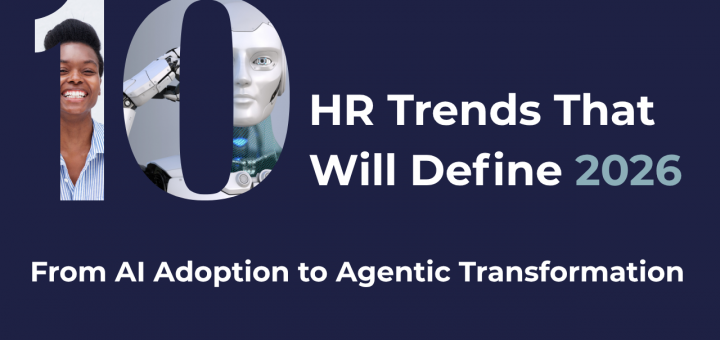
2026人力资源领域的十大趋势:从 AI 采用到“代理型转型”HRTech概述:HRTechChina每年都会聚合整理全球各个专家、媒体发布的新趋势,供大家参考,2026年的趋势是什么?你怎么看,欢迎一起讨论交流!关注HRTechChina
大家都在谈 AI 与人力资源,但 2026 年的焦点不再只是“工具”,而是——自治系统、被激发的人,以及可衡量的动能。
来自 Gartner、Mercer、麦肯锡和德勤的多份研究报告都指向同一个结论:我们正进入“代理型人力资源(Agentic HR)”时代——智能系统不再只是辅助决策,而是与我们并肩行动、共同执行。
以下是未来即将到来的十大发展趋势,以及希望保持领先的领导者应如何应对。
从“AI 采用”到“代理型运营模式”
AI 助手已经是去年的话题。根据德勤预测,到 2028 年,三分之一的企业应用程序将支持“自驱动代理(self-driving agents)”,能够以极少的人类干预来感知、决策与行动。新的北极星指标将是 RoA(自主回报率,Return on Autonomy) —— 衡量人机协作在速度、信任与价值上的释放。
CHRO 从政策执行者转变为价值架构师
Gartner 2026 年调查显示,CHRO 不再优化流程,而是重新设计“工作如何创造价值”。AI 正在接管事务性任务,而 HR 的新使命,是构建一个让人类目标、数据与技术高度契合的生态系统。
技能也许是新的操作系统,但“动机”才是能源
Mercer 称“技能智能(skills intelligence)”是新的组织操作系统。确实,岗位正在逐渐消融,取而代之的是基于技能的灵活团队。但技能只能说明“人能做什么”,而动机才揭示“人为什么去做”。
下一个进化方向不只是技能智能,而是 动机智能(Motivational Intelligence™)。当企业将工作与员工内在驱动力相匹配,不只是重组团队,而是点燃组织的持续动能。未来的人力资源,不是“基于技能”,而是“由动机驱动”。
战略性劳动力规划终于走向成熟
麦肯锡的 HR Monitor 显示,多数公司仍停留在“人数规划”阶段,而非“能力规划”。2026 年将成为分水岭——能否利用 AI 预测技能缺口、驱动因素与业务结果,将决定企业的竞争层级。
人机信任将成为新的商业指标
德勤《代理型企业(Agentic Enterprise)》报告指出:自主性若缺乏信任,终将失败。我们将看到“政策即代码(policy-as-code)”、AI 审计,以及“监护型代理(guardian agents)”等机制,用以监督其他代理。AI 治理与透明度,将决定其能否真正被采纳。
经理效能被重新定义
随着 AI 自动化行政工作,管理者将重新成为“教练”。Mercer 预测,这一转变将要求全新能力:同理心、数据素养,以及 AI 导师支持下的持续反馈机制。
职业成长取代薪酬,成为留才关键
麦肯锡与 Work Institute 的研究均显示:员工离职并非因为薪酬,而是因为“停滞”。2026 年,能够让职业发展可视化、个性化、持续化的企业,将赢得人才。
员工体验 = 行为改变
Gartner 指出,HR 投资的回报不在于技术采用,而在于员工行为的改变。换句话说,关键不是工具,而是“动能”。
平台整合与代理层叠
多平台碎片化的时代即将结束。未来属于互联平台,以及能跨系统运行的 AI 层。多代理协同(multi-agent orchestration)将推动实时教练、洞察与执行,助力企业规模化运营。
变革管理进化为“变革运营”
变革将不再是事件,而是一项长期能力。它是一种“持续运转的肌肉”,通过沟通、试验与信任构建而成。德勤发现,当前仅有 44% 的员工支持重大组织变革——这一比例将决定谁能突破、谁将停滞。
结语:进入“代理型HR”的新时代
2026 不只是又一个“转型之年”,而是新纪元的开端:
AI 不取代人类,而是放大人类潜能;领导者不再管理流程,而是设计生态系统;成长不再是季度指标,而是每日实践。
对于那些在构建未来的 HR 者来说——现在正是从试点走向实践的时刻:让参与转化为能量,让数据变为决策,让动机驱动可衡量的绩效。
这正是 Claro Mentor 的使命:帮助企业结合 AI 与人类动机,实现持续成长,而非条件成长。
思考提问在这 10 大趋势中,哪一个将对你所在的组织产生最大的影响?
作者:斯玛达尔·塔德莫尔 Claro-AI Mentor 首席执行官兼联合创始人
平台整合
2025年11月02日
平台整合
【HR术语】什么是人力分析?(What is people analytics?)
什么是人力分析?
人力分析是一种以数据为导向的方法,旨在改进有关团队成员和客户的业务决策。人力分析并不完全依赖直觉或传闻经验,而是为人力资源领导者提供全面的数据,以做出有据可依的战略决策。
人力分析整合了人力资源信息系统软件,以收集和检查大量信息,预测趋势,并提供与员工生命周期不同阶段相关的宝贵见解。人力分析也被称为人才分析,公司利用人力分析将合适的人才匹配到合适的岗位上。
人力分析为何重要?
人力分析可对数据进行评估,以加强以下方面的工作:
招聘和录用
入职培训
劳动力规划
薪酬实践
留住人才
绩效
生产力
参与
不仅仅是人力资源部门,所有部门都开始采用人才分析功能。这种转变预示着人力资源自动化程度的提高: 人力资源领导者必须做好迎接这些变化的准备,以提供最新、准确的结果。
利用人力资源自动化工具,人力资源领导者可以做出明智的决策,提升员工体验,促进公司目标的实现。在竞争激烈、不进则退的市场中,人力资源领导者必须表现出灵活性,不断适应工作场所的创新。
人力分析实例
人力资源中的人力分析包括员工生命周期的各个方面。人力分析的例子包括:
流失预测。这包括分析历史数据,找出导致团队成员流失的模式和因素,使您有能力预测哪些员工有离职风险。
招聘优化。人力分析有助于改进招聘方法,以吸引和留住顶尖人才。
绩效分析。这包括评估关键绩效指标(KPI)、目标实现情况和能力评估等绩效数据,以获得有助于识别高绩效人才及其成功因素的见解。
员工参与度。调查数据和情感分析有助于深入了解员工满意度、敬业度以及影响因素。这些信息有助于组织设计提高员工敬业度的措施,并创造更加积极的工作环境。
学习与发展。分析可追踪培训成果、技能掌握情况以及教育计划带来的绩效提升,帮助您优化与业务目标相一致的培训投资。
关键人员分析指标
早期离职率。该指标指的是在公司工作第一年内离职的人员比例。它有助于评估留住人才的努力。
缺勤率。这衡量的是一个人意外缺勤的频率,无论是由于疾病、压力还是其他个人原因。团队成员缺勤率高,说明对工作场所不满意。
参与度得分。这些分数反映了员工对工作和整个组织的投入程度和满意度。
绩效评级。根据预定指标和目标对个人或团队的绩效进行评估。
每次招聘成本。评估招聘流程的总成本,包括广告、面试和入职成本。
如何利用人力分析做出决策
人力资源人力分析的有效性取决于将从数据中获得的见解付诸行动。以下步骤将帮助您为组织做出清晰、明智的决策:
确定目标。明确概述您打算利用人力分析来应对的具体组织挑战。
收集数据。从人力资源信息系统(HRIS)或人力资源管理系统(HCM)、绩效考核、调查及其他来源收集相关数据。
分析。采用统计方法、可视化工具或人力分析平台,从收集的数据中得出有意义的见解。
识别模式。从数据中寻找相关性和趋势,从而深入了解员工行为和组织面临挑战的原因。
做出明智决策。利用从数据中收集到的洞察力,做出有据可依的决策,帮助组织实现其目标。
人力分析仪表盘
人力分析仪表盘是关键人力资源指标和数据的可视化呈现。它提供的关键信息一目了然,如离职率、参与度评分、绩效数据和招聘统计数据。
仪表盘使人力资源领导和管理人员能够跟踪和了解劳动力指标,从而轻松做出明智的决策。用户友好、信息丰富的仪表盘可让利益相关者迅速访问和解释重要数据,而无需完全依赖 IT 部门或分析师。
如何成功实施人才分析系统
将人才分析纳入多个部门需要人力资源领导者挺身而出,指导他人完成这项新举措。人力资源领导者可以通过实施这些做法来支持人员分析的整合:
以身作则。展示对人才分析的熟练程度,或至少是对人才分析的理解,可以让人力资源领导者有效地使用人才分析,并在其他人学习的过程中为他们树立榜样。
观察。人力资源领导者可以确定其组织目前进行的数据收集水平,并注意公司目前使用的数据分析方法,如数据收集技术和类别,以及哪些人力资源领导者对数据负责。
向所有人力资源专业人员介绍人力分析。为所有人力资源人员提供人员分析 "基础培训",可以提高他们对系统的认识。让人力资源专业人员熟悉人员分析,可以增强他们的能力,同时将这种方法融入公司文化和思维模式。
培训分析团队。教育人力分析专家如何阅读和仔细检查数据、警惕不准确的数据并做出基于数据的决策,这一点非常重要。这些人力资源专业人员决定着人才分析系统的有效性。
注意潜在隐患。公司可以利用人力资源信息系统平台简化、过滤数据,并以易于理解的方式将数据呈现给管理人员。另一个需要注意的挑战是通过数据加密和遵守诚实、公平和透明的政策来保护员工的隐私。
人力分析与人力资源分析
专业人士会交替使用 "人员分析 "和 "人力资源分析 "这两个术语。然而,两者之间是有区别的:
人力资源分析侧重于利用人力资源部门的数据来了解和管理员工。它深入研究团队成员的个人行为、绩效和参与度,旨在优化员工生命周期中的各种人力资源流程。
虽然人员分析也使用人力资源数据,但其关注点超出了这一范围,而是扩展到整个组织中更广泛的数据源,如整体业务绩效、财务、市场营销和销售。它收集更广泛的数据,以获得更深入的见解,为战略决策提供依据。
人力分析趋势
企业接受人员分析的程度以及使用人员分析的方式正在发生变化:
关注员工体验。现在的趋势是改善员工的整体旅程,强调健康和富有成效的远程工作体验等方面。
合乎道德的数据使用。随着人们对数据隐私的日益关注,数据使用的道德考量以及保持数据收集和分析的透明度将受到更多重视。
平台整合。人员分析工具将整合来自企业不同软件和应用程序的数据,从而更容易从单一来源获得所有必要的见解。
多样性、公平性和包容性。人们越来越重视利用人员分析来提高组织内部的多样性、公平性和包容性,而且这种情况只会继续增加。
人工智能集成。人力分析平台开始整合人工智能驱动的工具,以简化数据分析,并从复杂的数据集中获得更深入的见解。
人力分析如何改善企业文化?
人力分析为人力资源领导者、经理和高管提供数据支持,使员工绩效与公司目标保持一致。对这些数据进行有效评估并采取行动,有助于制定有效的招聘和培训策略、提高员工参与度,进而促进公司文化的发展。
以下为文章原文:
What is people analytics?
People analytics is a data-driven method that aims to improve business decisions regarding team members and customers. Rather than solely relying on instinct or anecdotal experience, people analytics provides HR leaders with comprehensive data to make evidence-based, strategic decisions.
People analytics integrates HRIS software to assemble and examine extensive information, predict trends, and provide valuable insights relating to the different stages of the employee lifecycle. Also known as talent analytics, companies use people analytics to match the right talent to appropriate roles.
Why is people analytics important?
People analytics assesses data to enhance the following areas:
Recruiting and hiring
Onboarding
Workforce planning
Compensation practices
Retention
Performance
Productivity
Engagement
Talent analytics is a function that all departments, not just HR, are beginning to adopt. This is a transformation that heralds an increase in HR automation: HR leaders must be ready to embrace these changes to deliver up-to-date, accurate results.
Leveraging HR automation tools enables HR leaders to make informed decisions that elevate the employee experience and promote company objectives. In a competitive, sink-or-swim market, HR leaders must demonstrate agility as they continuously adapt to innovations within the workplace.
Examples of people analytics
People analytics in HR encompasses various aspects of the employee lifecycle. Examples of people analytics include:
Attrition prediction. This involves analyzing historical data to identify patterns and factors leading to team member turnover, giving you the ability to predict which of your people are at risk of leaving.
Recruitment optimization. People analytics can help with refining recruitment approaches to attract and retain top talent.
Performance analysis. This involves evaluating performance data such as key performance indicators (KPIs), goal achievement, and competency assessments to gain insights that aid in identifying high-performing individuals along with the factors that contribute to their success.
Employee engagement. Survey data and sentiment analysis provide insights into employee satisfaction, engagement levels, and the factors influencing them. This information helps organizations design initiatives to improve engagement and create a more positive work environment.
Learning and development. Analytics can track training outcomes, skill acquisition, and performance improvements resulting from educational programs, helping you optimize training investments that align with business goals.
Key people analytics metrics
Early turnover rate. This metric refers to the percentage of people leaving within the first year of working at a company. It helps with assessing retention efforts.
Absence rate. This measures how often a person is unexpectedly absent from work, whether that’s due to sickness, stress, or other personal circumstances. A high absence rate among team members can indicate dissatisfaction in the workplace.
Engagement scores. These capture how committed and satisfied people are about their work and the organization as a whole.
Performance ratings. These evaluate individual or team performance against predefined metrics and goals.
Cost per hire. This assesses the total expenses of the hiring process, including advertising, interviewing, and onboarding costs.
How to use people analytics to make decisions
The effectiveness of HR people analytics depends on putting the insights gleaned from data into action. The steps below will help you make clear and knowledgeable decisions for your organization:
Define objectives. Clearly outline the specific organizational challenges you aim to address using people analytics.
Data collection. Gather relevant data from your HRIS or HCM, performance reviews, surveys, and other sources.
Analysis. Employ statistical methods, visualization tools, or a people analytics platform to draw meaningful insights from the collected data.
Identify patterns. Look for correlations and trends in the data that offer insights into workforce behaviors and the causes of your organization’s challenges.
Make informed decisions. Use the insights you’ve gathered from the data to make evidence-based decisions that help your organization reach its objectives.
People analytics dashboard
A people analytics dashboard is a visual representation of key HR metrics and data. It provides critical information at a glance, such as turnover rates, engagement scores, performance data, and recruitment statistics.
A dashboard empowers HR leaders and managers to track and understand workforce metrics so they can easily make informed decisions. A user-friendly and informative dashboard allows stakeholders to access and interpret essential data swiftly without having to rely exclusively on an IT department or analyst.
How to successfully implement a people analytics system
Incorporating talent analytics into multiple departments demands that HR leaders step up to guide others through this new initiative. HR leaders can support the integration of people analytics by implementing these practices:
Lead by example. Demonstrating proficiency in, or at least an understanding of, people analytics allows HR leaders to use it effectively and set an example for others as they learn the ropes.
Observe. HR leaders can identify the level of data collection they currently conduct at their organization and take note of the prevailing data analysis methods the company uses, e.g., data collection techniques and categories and which HR leaders are accountable for the data.
Introduce all HR professionals to people analytics. Providing people analytics “basic training” for all HR personnel will improve their knowledge of the system. Acquainting HR professionals with people analytics empowers them while infusing this method into the company culture and mindset.
Train the analytics team. It’s important to educate people analytics specialists on how to read and scrutinize data, watch out for inaccurate data, and make data-informed decisions. These HR professionals determine the effectiveness of the talent analytics system.
Be aware of potential pitfalls. Companies can use an HRIS platform to simplify, filter, and present the data in a digestible manner to managers. Another challenge to be mindful of is the essential protection of people’s privacy through data encryption and adherence to an honest, fair, and transparent policy.
People analytics vs HR analytics
Professionals use the terms “people analytics” and “HR analytics” interchangeably. However, there’s a difference between the two:
HR analytics focuses on leveraging the HR department’s data to understand and manage the workforce. It delves into individual team members’ behaviors, performance, and engagement, aiming to optimize various HR processes across the employee lifecycle.
While people analytics also uses HR data, its focus extends beyond this to wider data sources across the organization, such as overall business performance, finance, marketing, and sales. It gathers a broader spectrum of data to gain deeper insights that inform strategic decisions.
People analytics trends
The extent to which organizations embrace people analytics and the ways they use it are already changing:
Focus on employee experience. There’s a shift toward improving the overall employee journey, emphasizing aspects like wellness and productive remote work experiences.
Ethical data use. With the increased concern around data privacy, there’ll be greater emphasis on ethical considerations around data usage and maintaining transparency in data collection and analysis.
Platform integration. People analytics tools will integrate data from an organization’s different software and apps to make it easier to get all the necessary insights from a single source.
Diversity, equity, and inclusion. There’s a greater focus on using people analytics to improve diversity, equity, and inclusion within organizations and this will only continue to grow.
AI integration. People analytics platforms are starting to integrate AI-driven tools to streamline data analysis and derive deeper insights from complex data sets.
How can people analytics improve company culture?
People analytics provides HR leaders, managers, and executives with data to support the alignment of employee performance with company objectives. Effectively assessing and acting on this data contributes to effective hiring and training tactics, employee engagement, and in turn, a robust company culture.

 平台整合
平台整合
 平台整合
平台整合

 扫一扫 加微信
hrtechchina
扫一扫 加微信
hrtechchina