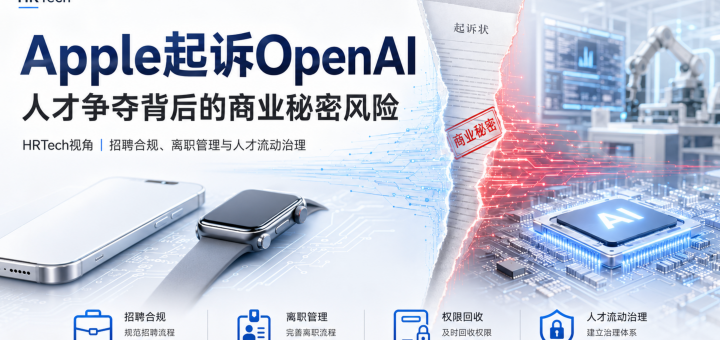
Apple 起诉 OpenAI 窃取商业秘密:一场由人才流动引发的硬件与组织治理危机Apple 指控多名前员工在加入 OpenAI 前后,非法获取并使用 Apple 的硬件研发、制造工艺与供应链机密。事件不仅是一场科技公司的知识产权诉讼,也暴露出 AI 人才争夺、员工离职管理和招聘合规中的系统性风险。
2026 年 7 月 10 日,Apple 向美国加州北区联邦地区法院提起诉讼,起诉前 Apple 员工 Chang Liu、Tang Yew Tan,以及 OpenAI Foundation、OpenAI Group PBC 和 io Products, LLC,指控其涉嫌盗用商业秘密和违反员工保密协议。
简单来说,Apple 的核心指控是:OpenAI 为了加快进入消费硬件市场,大量招募 Apple 的工程师和管理人员,而部分员工在离开 Apple 前后,涉嫌带走、下载或泄露 Apple 的内部文件、硬件设计资料、制造工艺和供应链信息,并将这些信息用于 OpenAI 的硬件研发和招聘活动。
目前,这些内容仍然是 Apple 在起诉状中提出的单方指控,尚未经过法院审理和认定。案件后续还需要经过被告答辩、证据开示、禁令听证和可能的庭审程序。
发生了什么:Apple 指控前员工离职后仍在获取内部资料
案件中最受关注的人物之一是 Chang Liu。Chang Liu 曾在 Apple 工作八年多,担任 Senior System Electrical Engineer,参与 iPhone 等敏感硬件项目。他于 2026 年 1 月 22 日离开 Apple,并加入 OpenAI。
Apple 称,Chang Liu 在离职过程中没有完成正常的设备归还和安全审查,也没有回应 Apple 关于离职面谈和保密义务的联系。Apple 进一步指控,他至少保留了一台 Apple 配发的工作电脑,并在离职后继续尝试访问 Apple 的内部系统。
2026 年 2 月 9 日前后,Chang Liu 据称发现自己仍然可以通过一个当时尚未被 Apple 发现的身份验证漏洞,访问 Apple 的云端网络存储系统。Apple 表示,他没有报告漏洞,而是在已经加入 OpenAI 的情况下,持续访问并下载 Apple 的内部资料。
Apple 称,被下载的资料包括未发布产品信息、技术演示文档、工程规格、项目数据,以及一套超过 1,000 页的技术文件。其中部分内容涉及主逻辑板,也就是 MLB 的制造流程、测试方式、设备选择和故障分析。
Apple 认为,这些信息并不是普通的员工工作经验,而是多年研发、制造和供应链投入所积累的商业秘密。
Apple 指控 OpenAI 将招聘面试变成信息获取渠道
案件中的另一名重要人物是 Tang Yew Tan,通常也被称为 Tang Tan。Tang Tan 曾在 Apple 工作约 24 年,最后担任 Vice President of Product Design for iPhone and Apple Watch。离开 Apple 后,他参与创办 io Products,后者于 2025 年被 OpenAI 以约 65 亿美元收购。Tang Tan 随后成为 OpenAI 的 Chief Hardware Officer。
Apple 指控,Tang Tan 和 OpenAI 的硬件团队在招聘 Apple 员工时,多次询问涉及 Apple 内部项目、产品代号和制造流程的问题。
起诉状称,OpenAI 要求部分候选人在面试中进行“Technical Deep Dive”,详细介绍其在 Apple 的工作,包括产品组件选择、CAD 工具、仿真软件、系统集成方法、供应商选择和制造协作流程。
更严重的指控是,OpenAI 面试人员曾要求 Apple 候选人携带实际零部件、样品、原型和设计资料参加面试,包括 Batteries、Systems-in-Package、main logic boards、shields、housings 和 back glass 等。
Apple 认为,这些面试要求已经超出了正常的人才评估范围,实质上是在利用招聘流程获取竞争对手的内部技术与产品信息。也有小道消息说是其与苹果9月新任CEO关系非常紧张。
前员工被指提前了解 Apple 的离职安全流程
Apple 还指控,Tang Tan 或 OpenAI 内部人员持有一份标注为“Need to Know”的 Apple 内部文件。
这份文件描述了 Apple 在员工离职时会采取哪些安全措施,包括设备检查、账户审查、取证流程和保密提醒。
根据 Apple 的说法,这份文件被提前分享给即将从 Apple 跳槽到 OpenAI 的员工,使其可以在正式提交离职申请前了解 Apple 的检查方式,从而规避安全审查。
Apple 还称,OpenAI 曾建议部分员工不要立即向 Apple 透露下一家公司是 OpenAI,并尽量争取正常的两周离职期,从而在离职前继续保留对 Apple 系统和资料的访问权限。
如果这些指控最终获得证据支持,这意味着问题可能并非个别员工的临时行为,而是已经涉及招聘、离职和人才引进流程中的组织性操作。
Apple 指控 OpenAI 利用其供应链和制造工艺
Apple 的诉讼并未停留在员工文件泄露层面。
Apple 还指控 OpenAI 和 io Products 利用前 Apple 高管掌握的供应商信息、内部术语和制造知识,接触 Apple 的长期合作伙伴。
其中一项指控涉及 Apple 的专有金属表面处理技术。Apple 称,OpenAI 或 io 要求一家 Apple 合作伙伴为其执行原本受严格保密协议约束的多步骤金属处理工艺,并让合作伙伴误以为这一行为已经获得 Apple 授权。
Apple 还表示,OpenAI 曾向参与电源、电池和制造设计的 Apple 供应商提出高度针对性的问题,而这些问题只有熟悉 Apple 内部技术和供应链体系的人才能提出。
从商业竞争角度看,这部分指控直接触及 Apple 最核心的竞争壁垒:不仅是产品设计本身,更包括如何制造、如何选择供应商、如何控制质量,以及如何实现全球规模化交付。
为什么这起案件对 HR 和企业管理具有重要意义
从 HRTech 的角度看,这起案件并不只是 Apple 与 OpenAI 之间的知识产权争议,而是一场典型的“人才流动风险事件”。
AI 行业正在以前所未有的速度争夺工程师、产品负责人、供应链专家和高级管理人员。当竞争从软件模型扩展到 AI 设备、芯片、机器人和消费硬件时,人才的价值已经不仅体现在个人能力,也体现在他们掌握的组织知识、技术路径和供应商网络。
企业面临的核心问题是:员工可以自由流动,但企业商业秘密不能跟着员工一起流动。
正常的职业经验、通用技能和行业知识属于员工个人能力的一部分。员工可以在新公司继续使用自己的专业判断、管理能力和工程经验。
但源代码、未发布产品信息、内部项目代号、具体设计图纸、测试数据、供应商合同、制造参数和专有流程,通常属于企业受保护的信息。两者之间的边界,正是许多公司在人才竞争中最容易忽视的地方。
HR 部门不能再把保密管理只交给法务和 IT
传统上,商业秘密保护常被视为法务或信息安全部门的职责。但从这起案件来看,风险实际上贯穿员工全生命周期。
风险从招聘开始。
当招聘团队要求候选人过度展示上一家公司的真实项目、代码、样品和内部文件时,企业本身就可能成为商业秘密侵权的参与者。
风险也存在于员工在职期间。
如果企业没有建立清晰的数据分级、访问权限和异常下载监测机制,即使员工已经提出离职,仍可能继续访问大量敏感资料。
风险更集中在离职阶段。
高风险岗位员工的权限关闭、设备归还、文件检查、个人邮箱转发记录和外部存储设备使用情况,都需要 HR、法务和 IT 共同管理。
风险还可能延续到新员工入职后。
新公司必须明确告诉员工,不得携带、上传或使用前雇主的机密资料,也不得在内部培训、产品设计或供应商会议中披露前雇主受保护的信息。
对企业 HR 的五项建议
第一,建立高风险岗位识别机制。
并不是所有员工离职都需要同样强度的审查。涉及核心研发、AI 模型、产品路线图、芯片、硬件设计、定价、客户数据、制造工艺和供应链关系的岗位,应被纳入高风险人员清单。
第二,把招聘合规写进面试流程。
企业应明确禁止面试官要求候选人提供前雇主的源代码、设计图、真实客户资料、内部文件、产品原型、供应商名单和未发布项目信息。
技术面试可以评估候选人的思考过程和专业能力,但不应要求候选人证明自己“掌握多少上一家公司的秘密”。
第三,强化离职前后的数据行为监测。
当员工提出离职或出现明显跳槽信号后,企业可依法加强对异常下载、批量复制、个人邮箱转发、外接设备使用和敏感文件访问行为的监测。
这一过程需要在适用法律、员工隐私政策和公司制度框架内进行,不能简单扩大为无差别监控。
第四,重新设计离职程序。
离职面谈不应只是薪资结算和设备归还。对于关键岗位,应加入商业秘密提醒、文件返还确认、系统访问终止、外部存储检查和持续保密义务确认。
第五,对新员工实施“干净入职”。
从竞争对手公司加入的新员工,尤其是高管和研发人员,应在入职时签署声明,确认不会携带、上传或使用前雇主的任何保密资料。
企业还应通过培训告诉管理者:不能因为新员工“知道很多”就鼓励其分享前公司的内部信息。
HRTech 可以如何帮助企业降低风险
这起案件也说明,员工离职管理正在从行政流程转变为数据治理和风险治理。
未来的人力资源系统不仅需要记录入职、转岗和离职日期,还需要与身份管理、设备管理、文档权限和安全监测系统连接。
例如,当关键员工提交离职申请后,系统可以自动触发一套风险工作流,包括权限复核、异常下载检查、设备归还任务、保密提醒和管理者确认。
招聘系统也可以加入面试合规提示,提醒面试官不得要求候选人披露前雇主机密,并对涉及“原型”“代码”“供应商名单”和“内部文档”等敏感内容的面试材料进行审核。
在 AI 时代,HRTech 的价值不只是提升招聘效率或员工体验,也包括帮助企业建立可审计、可追踪、可执行的人才风险管理体系。
结语
Apple 与 OpenAI 的诉讼最终如何发展,仍取决于后续证据和法院判断。
但这起案件已经给企业敲响警钟:当行业进入高强度人才争夺阶段,招聘速度、人才密度和技术能力固然重要,人才引进过程中的合规边界同样重要。
优秀人才可以带来经验、判断和创造力,但企业不能通过人才流动获取竞争对手的商业秘密。
对于 HR 而言,未来最重要的能力之一,不只是把人招进来,而是确保企业用正确的方式招人、用人和管理人员流动。
这既是法律风险问题,也是组织治理、雇主品牌和长期竞争力问题。
【HR术语】什么是离职?(What is offboarding?)
什么是离职?
离职是让员工脱离公司职位的过程,这种做法既适用于选择离职的员工,也适用于被解雇的员工。
入职流程让人联想到登机(帮助新员工适应新工作),而离职流程则类似于下飞机(为员工离职提供结构化框架)。
一个好的离职计划应该:
将公司内部的混乱降至最低
保护公司机密信息
获得离职员工的有益反馈
包括一个亲切的欢送会
为什么离职对人力资源领导者很重要?
计划周密、顺利进行的离职计划是维护以下方面的关键:
公司声誉
数据安全
积极的公司文化
成功的离职让雇主和即将离职的团队成员在业务关系期间和结束后保持相互尊重的关系。
什么是离职政策?
离职政策是一项详细而正式的计划,概述了离职流程的方方面面,使离职人员和他们离开的组织在离职期间能够更顺利地过渡。如果没有明确的离职政策,雇主就很容易面临潜在的安全威胁和法律问题,同时还会损害公司与离职员工之间的关系。
离职政策有助于公司:
应对员工变动带来的后勤挑战,重新分配职责
制定离职面谈模板
为所有员工创造一致的离职体验
通过收回公司资产和撤销对公司账户的访问权限,将安全风险降至最低
防止出现法律问题,如合同纠纷、赔偿纠纷或不当解雇
保护与离职者的关系
什么是离职电子邮件?
离职电子邮件是雇主发出的正式声明,证明某人在组织中的工作已经结束。无论离职是由于辞职、退休还是解雇,人力资源部门都必须提供一封正式信函,以管理最后几天的雇佣关系。
离职电子邮件之所以重要,是因为:
它是对离职人员在公司期间所做贡献和所取得成就的认可
通常包括离职面试问题,或为前团队成员提供就其经历提供反馈的机会,这有助于公司随着时间的推移不断改进
所使用的具体措辞将影响离职员工在必要时从政府获得财政支持的资格或丧失资格
成功离职的最佳做法是什么?
人力资源部门可以制定一个全面、体恤员工的离职计划,其中包括以下内容:
更新同事信息。人力资源部门知道团队成员即将离职后,可以立即向公司成员发送电子邮件。这样可以最大限度地减少可能损害离职人员声誉的谣言。
起草必要的法律文件。辞职信或解雇信、福利文件和保密信都是保护雇主和员工的文件。最好提前准备好这些文件,并存储在公司的申请人跟踪系统中。
专业技能的转移。确保将离职团队成员的经验和知识整理好,为下一位员工做好准备。如果员工与客户有联系,可将客户邮件转发给同事。
收回公司财产。清点离职员工持有的所有物品,确保公司财产全部收回。这包括:笔记本电脑、门卡、ID 徽章、制服等。
与 IT 部门沟通。确保 IT 部门停用员工的计算机和内部计算机系统,并删除数据访问权限,从而保护公司隐私和机密信息。
计划离职面谈。力求对员工的需求和观点保持敏感。这是向离职员工了解公司需要改进的缺陷的重要机会。
表达感激之情。在员工踏上下一段旅程时,人力资源部门可以组织一个告别派对,并赠送个性化礼物,以表达善意。
推荐职业介绍服务。告知即将离职的团队成员,公司可以通过与职业介绍服务机构合作,帮助他们寻找新工作(如有必要)。这将为他们重返就业市场提供优势。
离职与入职
乍一看,入职和离职似乎是两个极端。相反,可以把入职和离职看作是一本书的第一章和最后一章: 导言部分是场景的铺垫,而结尾部分则是线索的收尾。然而,二者的复杂性和敏感性是相似的,都需要按部就班的计划、精心组织的文书工作和足够的技巧。
入职培训是让新团队成员熟悉组织、文化和员工的过程。相比之下,离职则侧重于与离职人员保持积极的关系,同时理清所有遗留问题,保护公司免受法律和安全威胁。
对于员工和组织而言,入职和离职都存在不确定性和风险。如果双方都没有做好准备,没有一个正规的流程,沟通不畅和不满情绪就会升级。
离职和回旋镖式员工
当公司花时间为离职团队成员创造积极的离职体验时,他们不仅能以良好的条件结束,还能为未来的可能性敞开大门。竞争日趋激烈的就业市场催生了一种被招聘人员称为 "回旋镖员工 "的现象--他们会回到自己曾经工作过的组织。
《企业文化与回流员工》的最新研究强调,有很多理由可以考虑聘用回流员工:
56% 的人力资源专业人士和 51% 的经理会优先考虑或非常优先考虑离职后表现良好的回流求职者
33% 的人力资源专业人士和 38% 的管理人员认为,熟悉公司文化和较少的培训需求是重新雇用前团队成员的最大好处
顺利的离职流程如何改善公司文化?
一个良好的离职流程对离职员工和留任员工都有好处,既能让离职员工以良好的条件离开,又能保持对公司的忠诚度和员工的参与度。
友好的离职也为 "回旋员工 "敞开了大门。这表明公司是如此优秀,值得员工再回来。
一个全面的离职流程应考虑到所有员工(包括离职员工和留任员工)的福利,这样才能让每个人都能更顺利地度过过渡期,并建立一种体现充满活力的福利精神的公司文化。
利用人力资源技术实现离职流程自动化
成功、顺利地完成离职流程所需的努力不容小觑。人力资源技术可以通过以下方式帮助组织和简化整个离职流程:
创建一致的离职流程
确保离职人员获得积极的离职体验
提供提示、流程图和核对表,确保所有必要的交接任务都得到执行
提供离职面谈脚本
自动执行特定的离职程序(某些程序可自动发送最终薪酬摘要等文件)
以下为文章原文:
What is offboarding?
Offboarding is the process of disengaging an employee from their position within a company, a practice used both for people who choose to leave, and for those who are laid off.
While the onboarding process is reminiscent of boarding a plane (and helps new hires acclimate to a new job), the offboarding process is akin to to disembarking (and provides employees with a structured framework when leaving a position).
A good offboarding program should:
Minimize disruption within the company
Protect confidential company information
Gain helpful feedback from the exiting employee
Include a gracious goodbye party
Provide the departing employee with outplacement services, if necessary
Why is offboarding important to HR leaders?
A well-planned and smooth offboarding program is key to maintaining:
Company reputation
Data security
Positive company culture
Successful offboarding allows the employer and the exiting team member to maintain a relationship of mutual respect during and after the end of the business relationship.
What is an offboarding policy?
An offboarding policy is a detailed and formalized plan, outlining every facet of the exit process and enabling a smoother transition during the offboarding period for both the person leaving and the organization they leave behind. Without a clear offboarding policy, employers leave themselves vulnerable to potential security threats and legal issues, along with damage to the relationship between the company and exiting employee.
An offboarding policy helps companies to:
Manage the logistical challenges of a changing workforce and reassign responsibilities
Develop an exit interview template
Create a consistent offboarding experience for all employees
Minimize security risks by reclaiming company assets and withdrawing access to company accounts
Prevent legal issues, e.g., contract disputes, compensation disputes, or wrongful termination
Protect their relationship with the person leaving
What is an offboarding email?
An offboarding email is a formal declaration from the employer evidencing the end of someone’s time with an organization. Whether offboarding is the result of a resignation, retirement, or termination, the HR department must provide a formal letter to manage the last days of employment.
An offboarding email is important because:
It’s an acknowledgement of the leaving person’s contributions and achievements during their time with the company
It often includes either exit interview questions or the opportunity for former team members to provide feedback on their experience, which can help the company to improve over time
The specific wording used will impact–either qualifying or disqualifying–the leaving employee’s recourse to financial support from the government, if needed
What are the best practices for successful offboarding?
HR can create a comprehensive and compassionate offboarding program which includes these components:
Update co-workers. HR can email company members as soon as they know team member will be leaving. This minimizes rumors that could potentially damage the departing person’s reputation.
Draw up necessary legal documents. A letter of resignation or termination, benefits documents, and a letter of non-disclosure are documents which protect both the employer and employee. It’s best to prepare these ahead of time and store in the company’s applicant tracking system.
Transfer of expertise. Ensure that the departing team member’s experience and knowledge is organized and ready for the next hire. If the employee was in contact with clients, forward client emails to a co-worker.
Retrieve company property. Keep an inventory of all items which the departing team member has in their possession, to ensure a full recovery of all company property. This includes: laptop, keycard, ID badges, uniform, etc.
Communicate with IT. Protect company privacy and classified information by ensuring IT deactivates the employee’s computer, internal computer systems, and removes data access.
Plan an exit interview. Aim to be sensitive to the person’s needs and perspective. This is a key opportunity to learn from the departing employee about company flaws which need to be improved upon.
Show gratitude. HR can organize a goodbye party and personalized gift to show goodwill, as the employee embarks on their next journey.
Recommend outplacement services. Inform the departing team member that the company can help them look for a new job (if necessary), through partnering with an outplacement services agency. This can provide them with an advantage when back in the job-market.
Offboarding vs. onboarding
At first glance, onboarding and offboarding appear to be at opposite ends of the spectrum. Instead, think of onboarding and offboarding as the first and last chapters of a book: The introduction sets the scene while the conclusion ties up any loose threads. Yet, both are similar in that the complexity–and sensitivity–of each requires step-by-step planning, meticulously organized paperwork, and plenty of tact.
Onboarding is the process of familiarizing new team members with their organization,its culture, and its people. Offboarding, in contrast, is focused on maintaining a positive relationship with the person leaving, while tying up any loose ends and protecting the company from both legal and security threats.
Neither onboarding nor offboarding are without uncertainty and risk for employees and organizations. Without preparation and a formalized process on both sides, miscommunication and discontent can escalate.
Offboarding and boomerang employees
When a company takes the time to create a positive offboarding experience for departing team members, they not only end on good terms, but leave the door open for future possibilities. An increasingly competitive job market has given rise to a phenomenon recruiters refer to as “boomerang employees”—people who return to an organization at which they were previously employed.
Recent research from The Corporate Culture and Boomerang Employee study highlighted there are plenty of reasons to consider hiring a boomerang employee:
56 percent of HR professionals and 51 percent of managers give high or very high priority to boomerang job applicants who left in good standing
33 percent of HR professionals and 38 percent of managers agree that familiarity with a company’s culture—and fewer training needs—are the biggest benefits of rehiring former team members
How can a smooth offboarding process improve company culture?
A good offboarding process benefits both the departing team member and those remaining, allowing the departing employee to leave on good terms, while maintaining company loyalty and employee engagement.
Amicable offboarding also leaves the door open to “boomerang employees.” This shows that the company is so good, it’s worth coming back to.
A comprehensive offboarding process which takes into account the wellbeing of all employees, those departing and those staying, can lead to a smoother transition period for everyone and builds a company culture that embodies a vibrant spirit of wellbeing.
Automating offboarding processes with HR tech
The effort required to successfully and smoothly complete an offboarding process cannot be underestimated. HR tech can help organize and streamline the entire exit process by:
Creating a consistent offboarding process
Ensuring that the person leaving has a positive exit experience
Offering prompts, flowcharts, and checklists to ensure that all necessary handover tasks are carried out
Providing an exit interview script
Automating specific offboarding procedures (some programs can automatically send documents such as final pay summaries)

 数据安全
数据安全
 数据安全
数据安全
 数据安全
数据安全
 数据安全
数据安全
 数据安全
数据安全
 数据安全
数据安全
 数据安全
数据安全
 数据安全
数据安全
 数据安全
数据安全
 数据安全
数据安全


 扫一扫 加微信
hrtechchina
扫一扫 加微信
hrtechchina